



China, Latin America achieve fruitful results in jointly addressing climate change
Climate change is a common challenge faced by all human beings. As a responsible major developing country, China has taken an active approach and made important contributions to the world's green development. In September 2020, China announced that it would strive to peak carbon emissions by 2030 and achieve carbon neutrality by 2060. Over the past five years, China has built the world's largest and fastest-growing renewable energy system and established the world's largest and most complete new energy industrial chains. China also leads the world in expanding green coverage in both scale and speed, contributing a quarter of the world's new green area and becoming the first in the world to achieve zero growth in land degradation. The public satisfaction rate with the ecological environment has remained above 90 percent for several consecutive years.
China champions a just and fair global green transition, fully respects the development rights of developing nations, and has worked relentlessly to narrow the North-South divide in this process. Over the past decade, China has helped push down the energy cost of global wind power and photovoltaic power projects by over 60 percent and 80 percent respectively, making clean energy accessible to and affordable for all countries, especially developing ones. At present, 58 percent of the world's solar power is generated in low- and middle-income countries, an achievement not possible without China's contributions. China has also been deeply engaged in South-South cooperation in addressing climate change. It has signed project documents with 42 countries, and mobilized and provided over RMB 177 billion yuan in project funds to support developing countries, especially small island states and the least developed countries, in response to climate change.
Like China, Latin American and Caribbean countries also take the challenge of climate change very seriously. Engaging in diverse forms of cooperation in this field, China and Latin American and Caribbean countries have established a highly efficient cooperation mechanism that has yielded substantial results. Since the first ministerial meeting of the China-CELAC Forum in 2015, addressing climate change has been incorporated into the joint action plan—now in its fourth phase of implementation—through cooperation in key areas between China and the CELAC member states. Under the Forum's framework, the First China-CELAC Disaster Management Cooperation Ministerial Forum was held via video link in August 2022, officially launching a dedicated mechanism in this area. Through these channels, China and Latin America have enhanced collaboration in disaster prevention and relief, post-disaster reconstruction, and climate adaptation, effectively boosting the region's development resilience.
Cooperation with China on green energy projects has contributed significantly to the development and transformation of countries in Latin America. The San Gaban III Hydropower Project in Peru, invested in and built by Chinese enterprises, was officially put into operation this year, easing the power shortage for over a million people. The Tanque Novo wind power project in Brazil can reduce carbon dioxide emissions by 650,000 tons annually, with a carbon sequestration effect equivalent to planting a 1,800-hectare forest. The Gaocharay Photovoltaic Power Station in Argentina, the largest and highest-altitude photovoltaic project in South America, is hailed as a “sunflower” blooming in the Andes Mountains.
China's new energy vehicles (NEVs) are upgrading and greening the transportation systems in regional countries. Given that the transport sector accounts for 20 percent of total emissions in Latin America, NEVs are crucial for the region's decarbonization. Chinese cars now make up half of Latin America's NEV market. Around 6,000 Chinese-made fully electric buses are operating in countries like Brazil, Chile, Colombia, and Uruguay, providing convenient public transport while contributing to urban emission reduction.
China and Latin America are both committed to protecting ecosystems such as forests. In 2021, China, Brazil and other Latin American countries signed the Glasgow Leaders' Declaration on Forests and Land Use at COP26, committing to achieving zero deforestation by 2030. Recently, Brazilian soybeans with zero deforestation and zero vegetation damage arrived in China, demonstrating to the world China and Latin America's determination and actions to strengthen sustainable agricultural cooperation.
China prioritizes cooperation on climate change with small island states such as those in the Caribbean. China has established the China-Caribbean disaster reduction and prevention fund to assist Caribbean countries in responding to climate disasters, built the China-Caribbean development center to promote practical cooperation in eight major fields including food security, climate change and green development, and launched the International Zero-Carbon Islands Cooperation Initiative to assist Caribbean countries in building green islands. Just a few weeks ago, China and Guyana signed a memorandum of understanding on South-South cooperation on green and low-carbon transportation to address climate change. China will provide Guyana with NEVs and supporting charging facilities, and support it in building a demonstration project for low-carbon transformation.
In September this year, Chinese President Xi Jinping at the United Nations Climate Summit announced that China will, by 2035, reduce economy-wide net greenhouse gas emissions by 7 to 10 percent from peak levels. This marks the first time China has committed to an absolute, economy-wide reduction target encompassing all greenhouse gases. It signifies the country's transition toward a more systematic and comprehensive model of low-carbon development. Simon Stiell, Executive Secretary of the UN Framework Convention on Climate Change, said, “We know China has a long and impressive record of meeting and surpassing its targets for climate change and clean energy. We appreciate President Xi's commitment both to new emissions reduction targets and his comments that China will be striving to do better.”
The 30th Conference of the Parties to the UN Framework Convention on Climate Change (COP30) just concluded in Belém, Brazil. China's announcement of a new round of Nationally Determined Contributions represents concrete support for Brazil's hosting of this important conference and will be instrumental in boosting the international community's confidence in global climate governance. As Chinese President Xi Jinping's Special Representative and Vice Premier Ding Xuexiang proposed at the Belém Climate Summit, we need to keep to the right direction of green and low-carbon transformation, translate climate commitments into action, and deepen openness and cooperation to achieve sustained progress in global climate governance. China stands ready to work with all countries, including those in Latin America and the Caribbean, to address climate and environmental challenges, better protect our planet, and build a community with a shared future for humanity.
The author is an international affairs observer.
Photos
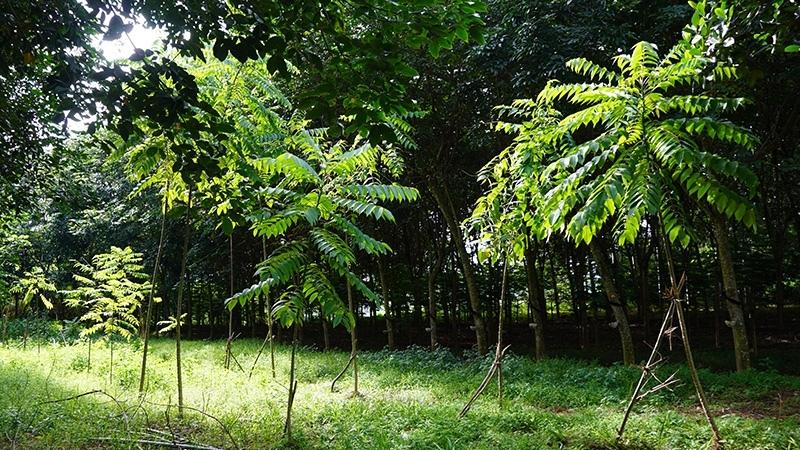 Xishuangbanna in SW China's Yunnan builds distinctive modern agricultural system
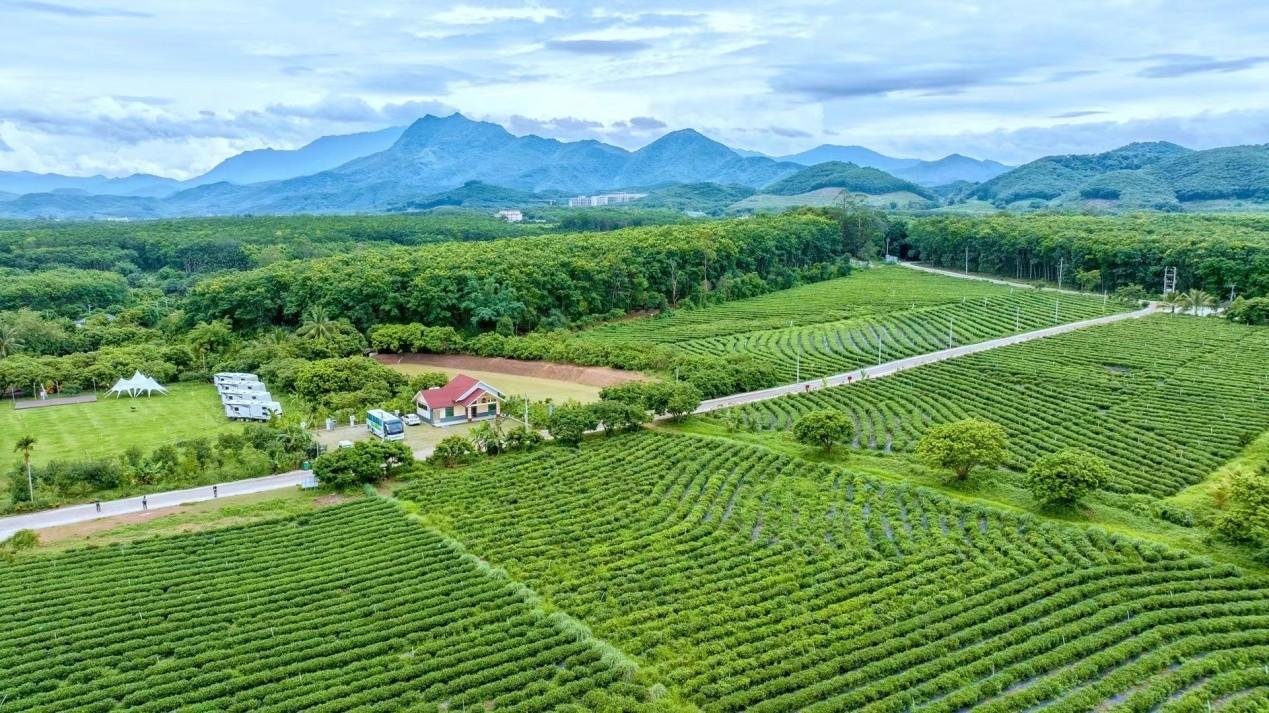 Int'l delegation explores organic tea culture in Baisha, S China's Hainan
 Chamber Concert of Chinese Classical Music held at China Cultural Center in Kuwait
 27th Harbin Ice-Snow World to officially begin construction in NE China
Related Stories
- China supports Global South in fighting climate change: Brazilian minister
- China to work with all parties to achieve positive, balanced outcomes in COP30: spokesperson
- Stronger South-South cooperation urged at COP30 to advance global climate governance
- COP30 summit kicks off in Belem, Brazil
- China to speed up full green transition, advance carbon-peaking efforts: vice premier
- China's climate action: A record of deeds
- As US reverses course, the world's climate agenda should not collapse
- With fresh pledges, China sets example as "grown-up" in global climate action
- Global cooperation urged on disasters
- Climate change linked to nearly 100,000 heatwave deaths in 2023: study
Copyright © 2025 People's Daily Online. All Rights Reserved.
 久久99热播精品免费