



Black-necked cranes start migration from reservoir in Lhunzhub, Xizang
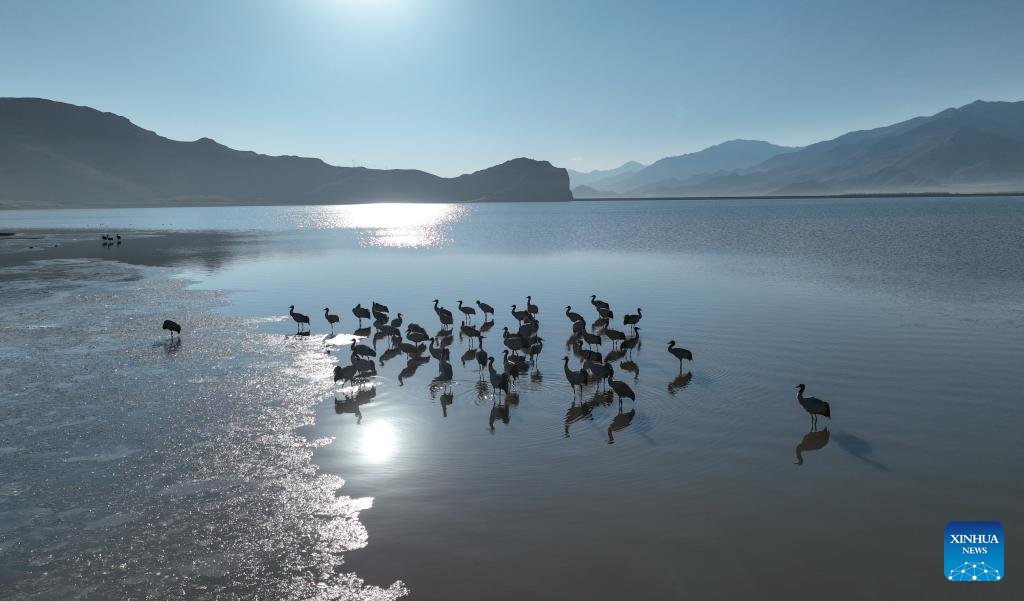
Black-necked cranes are seen at a reservoir in Lhunzhub County of Lhasa, southwest China's Xizang Autonomous Region, March 17, 2024. As the temperature gradually rises, black-necked cranes have started their migration from the reservoir in Lhunzhub County. The black-necked crane, a species under first-class state protection in China, mainly inhabits plateau meadows and marshes at an altitude of 2,500 to 5,000 meters. (Xinhua/Jigme Dorje)
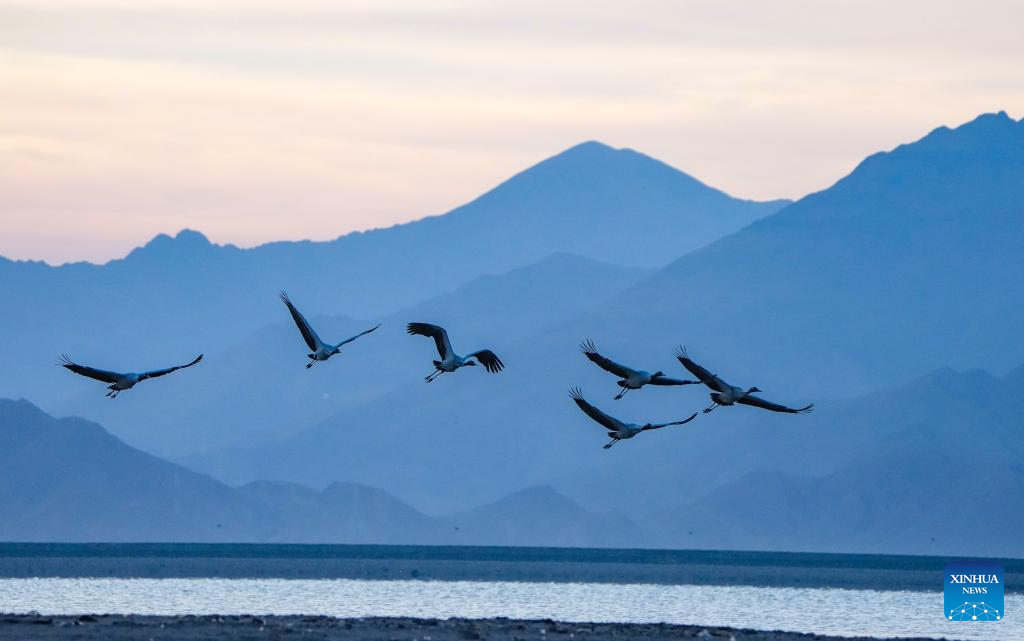
Black-necked cranes fly at a reservoir in Lhunzhub County of Lhasa, southwest China's Xizang Autonomous Region, March 17, 2024. As the temperature gradually rises, black-necked cranes have started their migration from the reservoir in Lhunzhub County. The black-necked crane, a species under first-class state protection in China, mainly inhabits plateau meadows and marshes at an altitude of 2,500 to 5,000 meters. (Xinhua/Jigme Dorje)
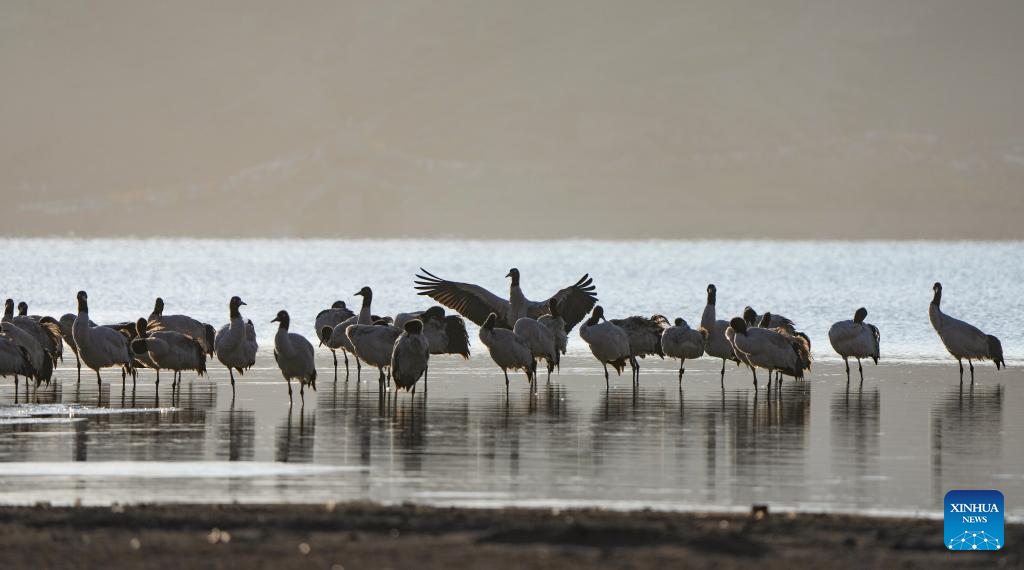
Black-necked cranes are seen at a reservoir in Lhunzhub County of Lhasa, southwest China's Xizang Autonomous Region, March 17, 2024. As the temperature gradually rises, black-necked cranes have started their migration from the reservoir in Lhunzhub County. The black-necked crane, a species under first-class state protection in China, mainly inhabits plateau meadows and marshes at an altitude of 2,500 to 5,000 meters. (Xinhua/Jigme Dorje)
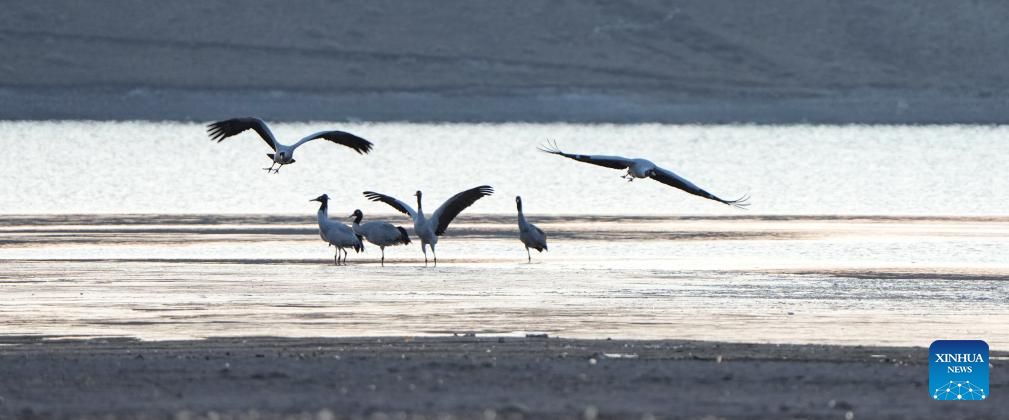
Black-necked cranes are seen at a reservoir in Lhunzhub County of Lhasa, southwest China's Xizang Autonomous Region, March 17, 2024. As the temperature gradually rises, black-necked cranes have started their migration from the reservoir in Lhunzhub County. The black-necked crane, a species under first-class state protection in China, mainly inhabits plateau meadows and marshes at an altitude of 2,500 to 5,000 meters. (Xinhua/Jigme Dorje)
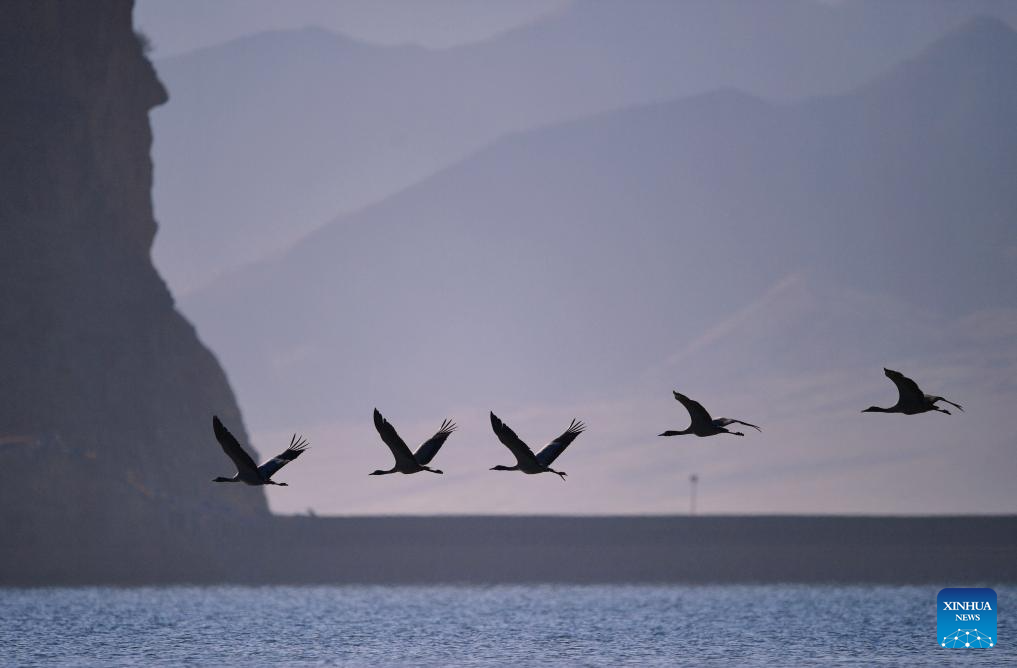
Black-necked cranes fly at a reservoir in Lhunzhub County of Lhasa, southwest China's Xizang Autonomous Region, March 17, 2024. As the temperature gradually rises, black-necked cranes have started their migration from the reservoir in Lhunzhub County. The black-necked crane, a species under first-class state protection in China, mainly inhabits plateau meadows and marshes at an altitude of 2,500 to 5,000 meters. (Xinhua/Zhang Rufeng)
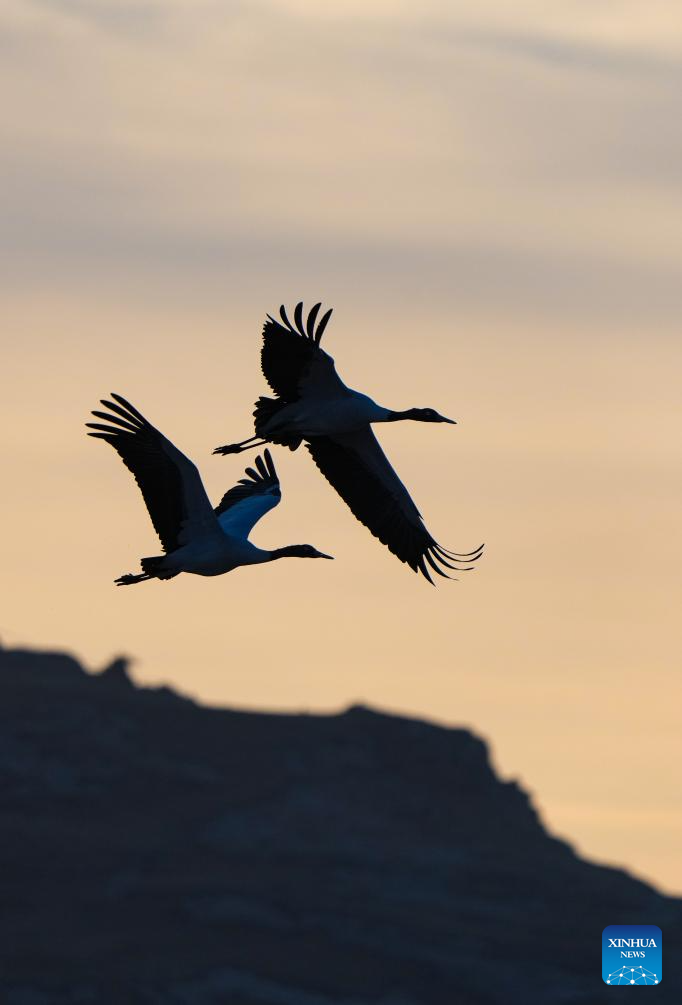
Black-necked cranes fly at a reservoir in Lhunzhub County of Lhasa, southwest China's Xizang Autonomous Region, March 17, 2024. As the temperature gradually rises, black-necked cranes have started their migration from the reservoir in Lhunzhub County. The black-necked crane, a species under first-class state protection in China, mainly inhabits plateau meadows and marshes at an altitude of 2,500 to 5,000 meters. (Xinhua/Jigme Dorje)
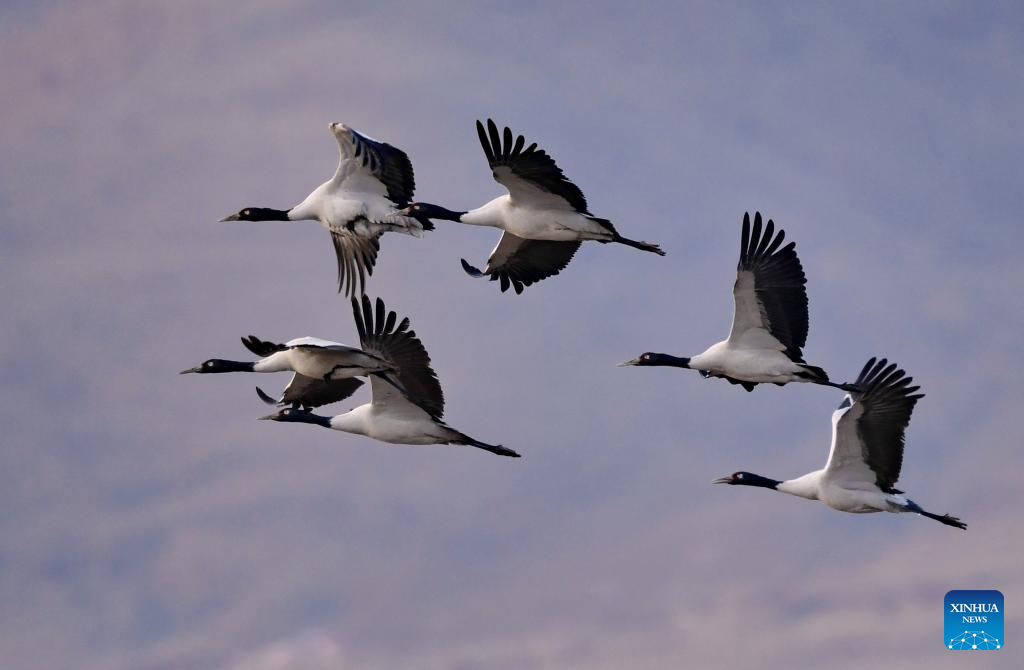
Black-necked cranes fly at a reservoir in Lhunzhub County of Lhasa, southwest China's Xizang Autonomous Region, March 17, 2024. As the temperature gradually rises, black-necked cranes have started their migration from the reservoir in Lhunzhub County. The black-necked crane, a species under first-class state protection in China, mainly inhabits plateau meadows and marshes at an altitude of 2,500 to 5,000 meters. (Xinhua/Zhang Rufeng)
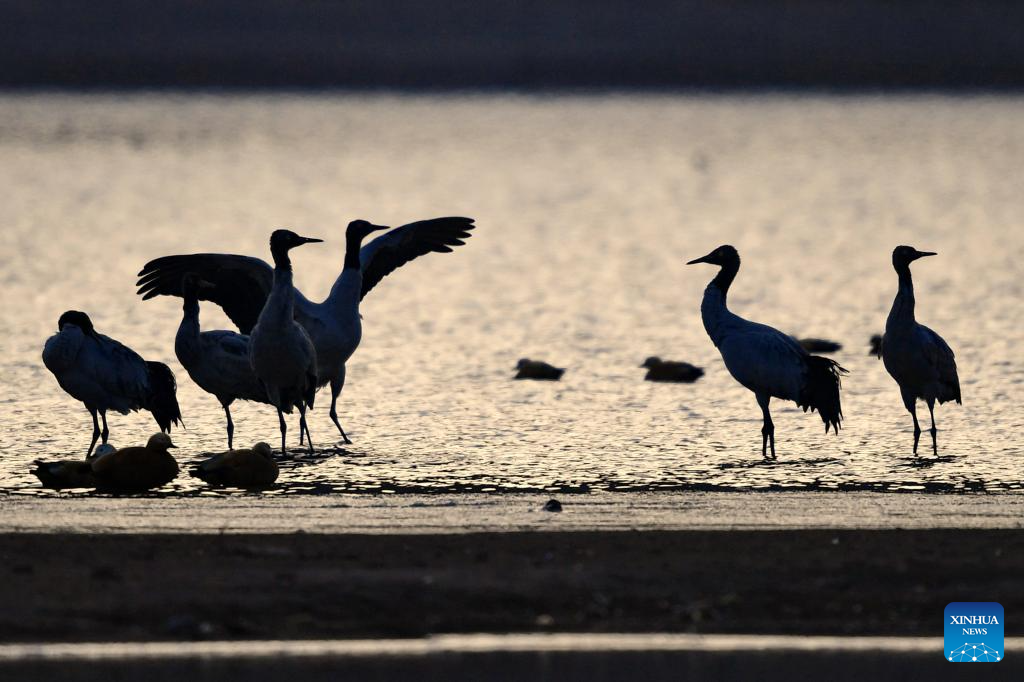
Black-necked cranes are seen at a reservoir in Lhunzhub County of Lhasa, southwest China's Xizang Autonomous Region, March 17, 2024. As the temperature gradually rises, black-necked cranes have started their migration from the reservoir in Lhunzhub County. The black-necked crane, a species under first-class state protection in China, mainly inhabits plateau meadows and marshes at an altitude of 2,500 to 5,000 meters. (Xinhua/Zhang Rufeng)
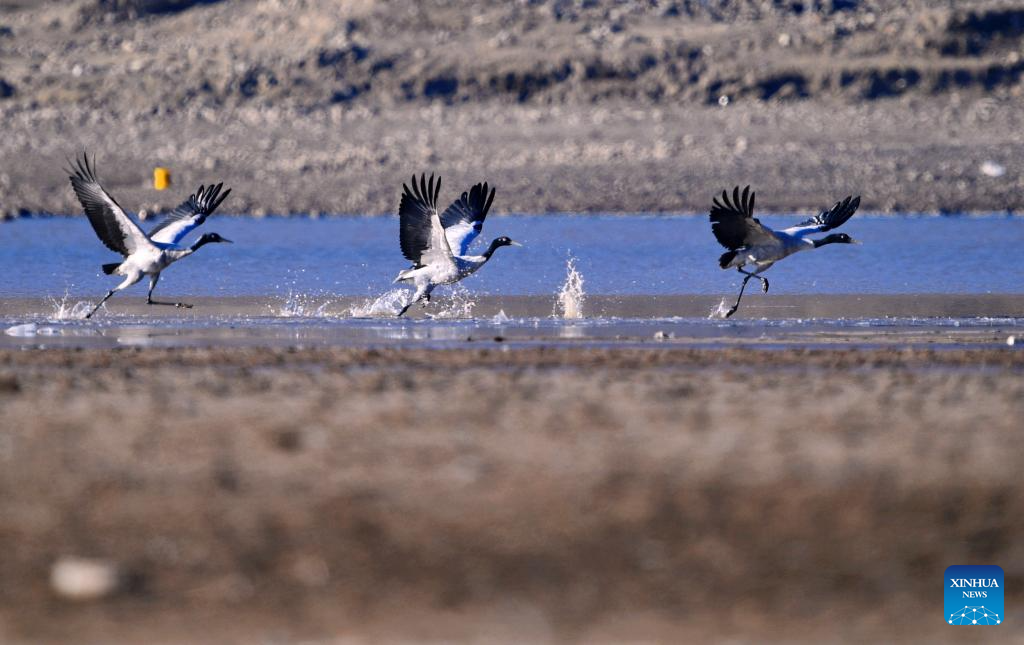
Black-necked cranes fly at a reservoir in Lhunzhub County of Lhasa, southwest China's Xizang Autonomous Region, March 17, 2024. As the temperature gradually rises, black-necked cranes have started their migration from the reservoir in Lhunzhub County. The black-necked crane, a species under first-class state protection in China, mainly inhabits plateau meadows and marshes at an altitude of 2,500 to 5,000 meters. (Xinhua/Zhang Rufeng)
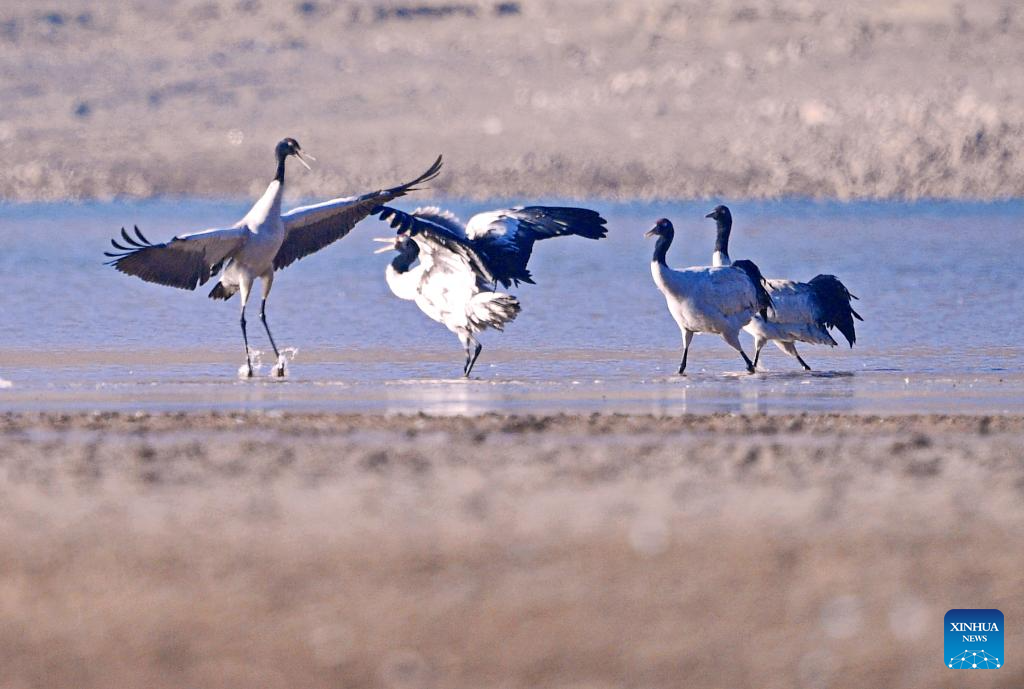
Black-necked cranes are seen at a reservoir in Lhunzhub County of Lhasa, southwest China's Xizang Autonomous Region, March 17, 2024. As the temperature gradually rises, black-necked cranes have started their migration from the reservoir in Lhunzhub County. The black-necked crane, a species under first-class state protection in China, mainly inhabits plateau meadows and marshes at an altitude of 2,500 to 5,000 meters. (Xinhua/Zhang Rufeng)
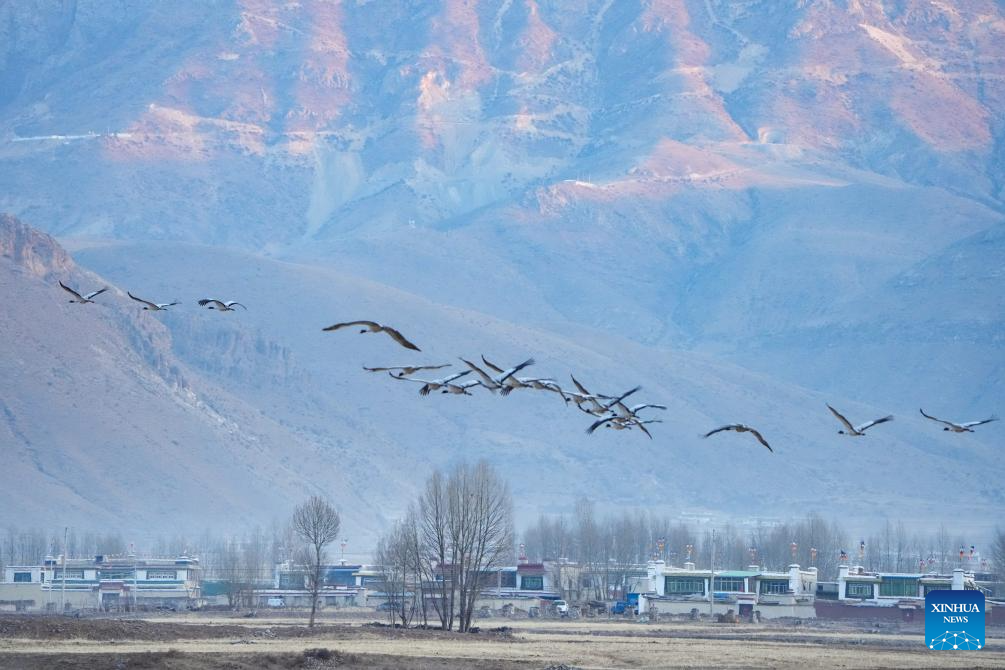
Black-necked cranes fly at a reservoir in Lhunzhub County of Lhasa, southwest China's Xizang Autonomous Region, March 17, 2024. As the temperature gradually rises, black-necked cranes have started their migration from the reservoir in Lhunzhub County. The black-necked crane, a species under first-class state protection in China, mainly inhabits plateau meadows and marshes at an altitude of 2,500 to 5,000 meters. (Xinhua/Jigme Dorje)
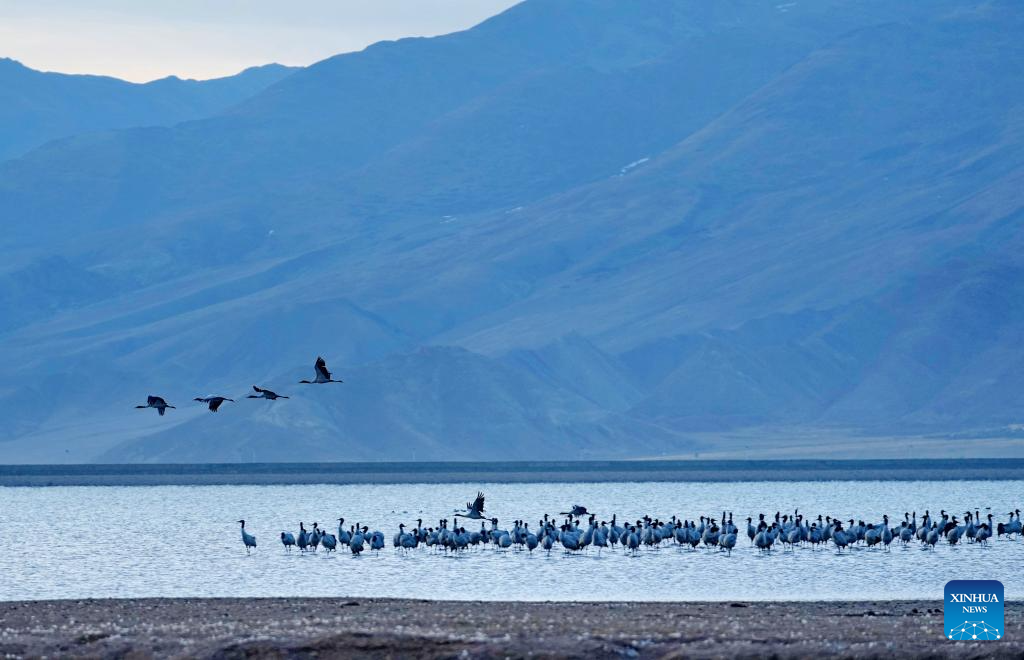
Black-necked cranes are seen at a reservoir in Lhunzhub County of Lhasa, southwest China's Xizang Autonomous Region, March 17, 2024. As the temperature gradually rises, black-necked cranes have started their migration from the reservoir in Lhunzhub County. The black-necked crane, a species under first-class state protection in China, mainly inhabits plateau meadows and marshes at an altitude of 2,500 to 5,000 meters. (Xinhua/Zhang Rufeng)
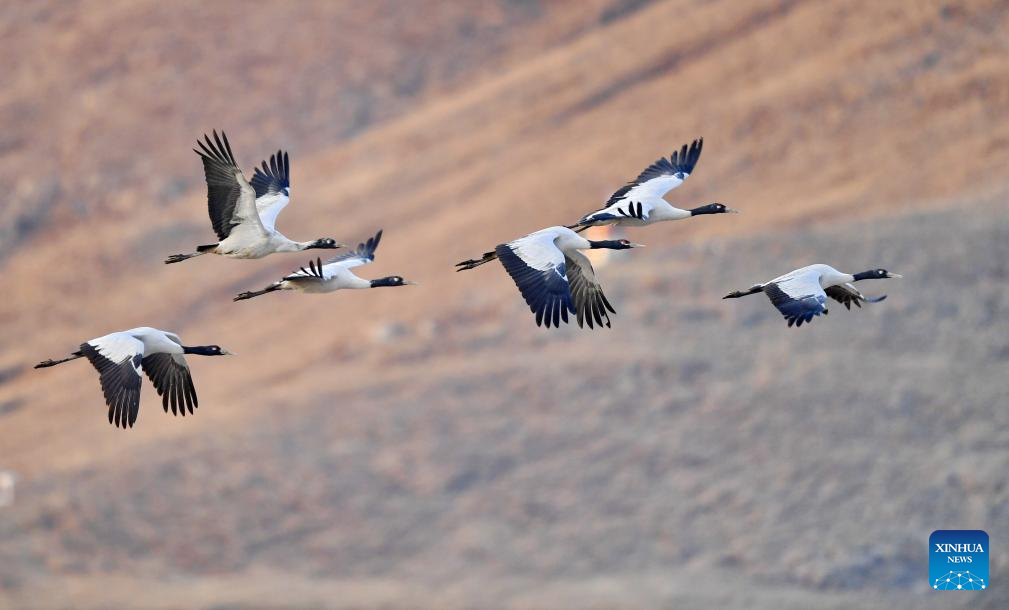
Black-necked cranes fly at a reservoir in Lhunzhub County of Lhasa, southwest China's Xizang Autonomous Region, March 17, 2024. As the temperature gradually rises, black-necked cranes have started their migration from the reservoir in Lhunzhub County. The black-necked crane, a species under first-class state protection in China, mainly inhabits plateau meadows and marshes at an altitude of 2,500 to 5,000 meters. (Xinhua/Zhang Rufeng)
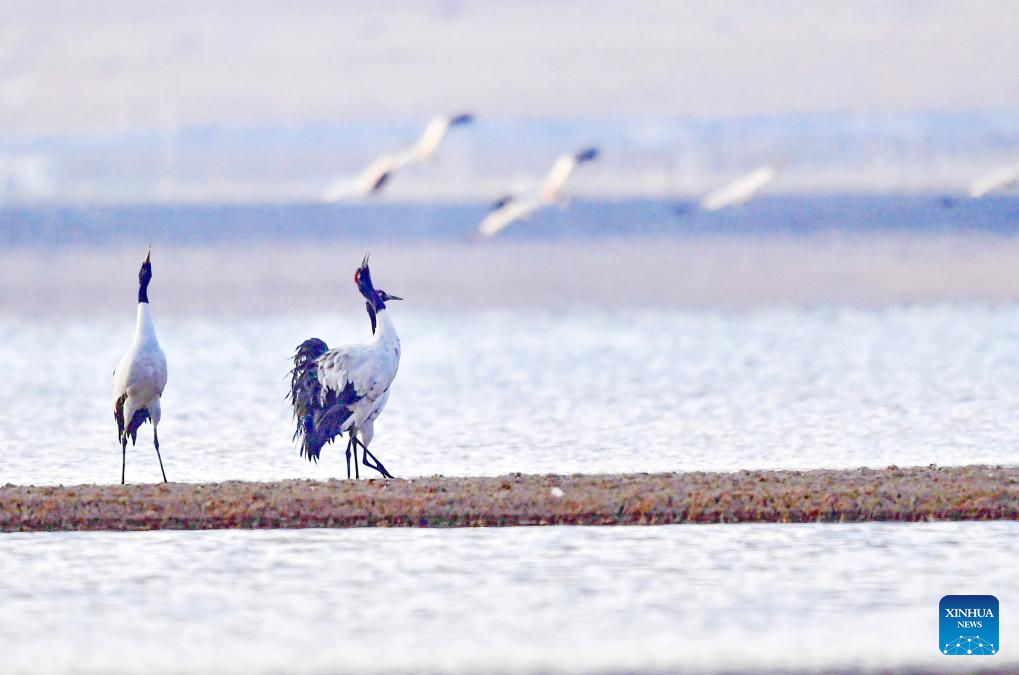
Black-necked cranes are seen at a reservoir in Lhunzhub County of Lhasa, southwest China's Xizang Autonomous Region, March 17, 2024. As the temperature gradually rises, black-necked cranes have started their migration from the reservoir in Lhunzhub County. The black-necked crane, a species under first-class state protection in China, mainly inhabits plateau meadows and marshes at an altitude of 2,500 to 5,000 meters. (Xinhua/Zhang Rufeng)
Photos

Related Stories
Copyright © 2024 People's Daily Online. All Rights Reserved.
 久久99热播精品免费