

Expanding imports and promoting balanced trade has always been a major economic goal, one which China has strived for since becoming a member of the World Trade Organization in 2001. From 2001 to 2017, China’s average annual growth rate of goods imports reached 13.5%, which is twice the speed of the global average.
In 2017, China imported $1.84 trillion worth of goods from around the world—6.2 times that of 2002—in the first year after it joined the WTO. Service imports amounted to $467.6 billion in 2017, with a deficit of $239.5 billion, which is 10.1 and 798.3 times higher than 2002 figures, respectively. Now, China is the world’s second largest importer of goods and the second largest importer of services, accounting for about a tenth of total global imports.
Today, China’s enormous market is in want of more quality products and services to meet the Chinese people’s desire for a better life. The world’s largest middle-income group is going through an accelerating consumption upgrade that is just too big a cake for any business to ignore. According to a Ministry of Commerce report, Chinese consumers have strong demand for imported goods, and imported goods have become an important supplement to market supply. It is estimated that in the next 15 years, China’s imports of goods and services will exceed $30 trillion and $10 trillion, respectively.
Since the beginning of this year, China has repeatedly reduced taxes, resulting in a reduction in the total tariff level from 9.8% in the previous year to 7.5%, with an average reduction of 23%. Starting from May 1, China has exempted duties on as many as 28 medicines, including all cancer drugs, to further increase access to medicines. Starting from Jul. 1, China significantly lowered import tariffs on automobiles as well as a wide range of consumer goods. And starting from Nov. 1, China slashed most-favored-nation tariffs on a total of 1,585 taxable items.
Spurred by the series of measures, the proactive expansion of imports has achieved remarkable results. According to data released by the General Administration of Customs, in the first 9 months this year, China’s cumulative imports totaled 10.42 trillion yuan ($1.5 trillion), a year-on-year increase of 14.1%, which is 7.6 percentage points higher than exports.
There is no doubt that the import fair will unleash the power of China’s domestic demand, which has been witnessed too often in recent years. But the CIIE will be more than just a space for money and goods/services to change hands. It is a signal that bears the clear message that China is willing to open its market wider to the world and the milestone event will usher in a closer relationship between China and global businesses in the foreseeable future.

 Award-winning photos show poverty reduction achievements in NE China's Jilin province
 People dance to greet advent of New Year in Ameiqituo Town, Guizhou
 Fire brigade in Shanghai holds group wedding
 Tourists enjoy ice sculptures in Datan Town, north China
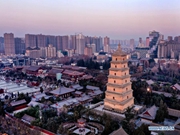 Sunset scenery of Dayan Pagoda in Xi'an
 Tourists have fun at scenic spot in Nanlong Town, NW China
 Harbin attracts tourists by making best use of ice in winter
 In pics: FIS Alpine Ski Women's World Cup Slalom
 Black-necked cranes rest at reservoir in Lhunzhub County, Lhasa
 China's FAST telescope will be available to foreign scientists in April


 久久99热播精品免费